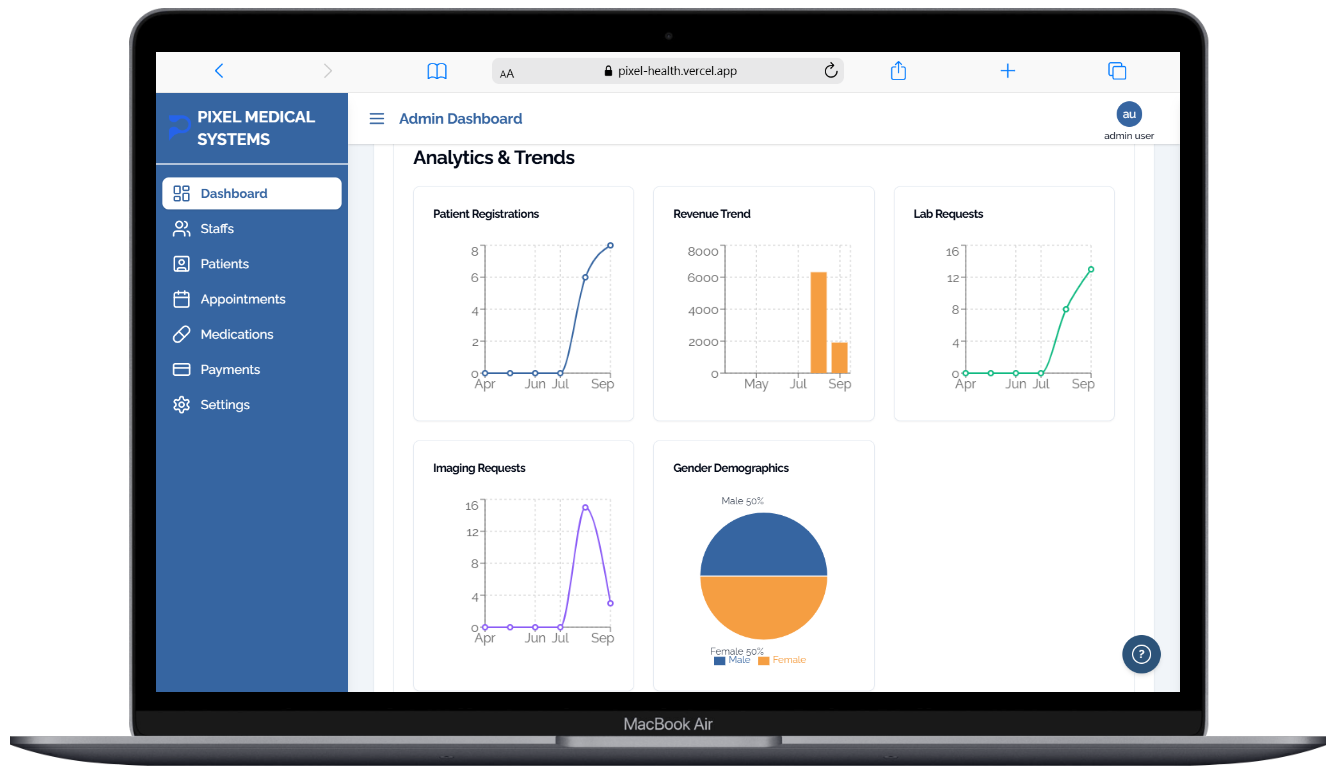
Hospitals manage complex workflows across outpatient services, emergency care, inpatient departments, laboratories, pharmacies, and administrative offices. When these processes rely on paper-based records and disconnected systems, coordination becomes difficult, data is harder to access, and reporting is slow.
Electronic Medical Record (EMR) systems address this by creating a shared digital environment for patient information and clinical workflows. However, implementing EMR in a hospital setting involves more than installing software — it requires understanding clinical workflows and earning the trust of the people who use the system every day.
Start with Workflows, Not Features
One of the most important lessons from hospital EMR deployment is that technology alone doesn't solve operational problems. Before any system is configured, the implementation team needs to sit with doctors, nurses, lab technicians, and administrators to understand how work actually flows through the hospital.
- How does a patient move from registration to consultation to lab to pharmacy?
- What information does each department need to do its job?
- Where are the current bottlenecks and delays?
- What paper forms are already working well?
The best EMR system is one that fits into how clinical staff already work — not one that forces them to change everything at once.
Training Is Not Optional
Healthcare workers are busy. Asking them to learn a new system while managing patients requires careful planning. Training should be practical, hands-on, and delivered in small groups. We've found that department-specific training works better than general sessions — lab staff need different workflows than pharmacy or nursing.
Ongoing support is equally important. The first few weeks after go-live are critical. Having support staff available on-site to answer questions and resolve issues builds confidence and prevents early frustration from undermining adoption.
Data Migration Requires Care
Moving from paper to digital doesn't mean scanning every old file. A practical approach is to start fresh with the digital system while keeping paper archives accessible for reference. Active patients and ongoing treatments should be entered into the new system, but attempting to digitize years of paper records usually creates more problems than it solves.
Integration Across Departments
The real value of a hospital information system appears when departments are connected. A doctor's prescription flows directly to the pharmacy. Lab orders generate automatic requests. Billing reflects actual services delivered. This integration reduces manual handoffs, minimizes errors, and gives hospital administrators visibility into operations across the facility.
Healthcare digitalization is a gradual process. Starting with the departments where digital systems create the most immediate value, then expanding, is more sustainable than attempting a hospital-wide launch on day one.
Back to Blog